 how-to
Ceramic Coating Curing Time Before Driving Explained
Last Updated: October 29, 2026
Quick Summary
You can usually drive 2-4 hours after application once the ceramic coating curing reaches touch-dry, provided the weather is dry and your route is paved. Full ceramic coating curing takes 5-7 days for most consumer products, and up to 30 days for professional-grade coatings.
- Wait at least five to seven days before the first wash to avoid disrupting the cure.
- Rain within the first 2-4 hours is a genuine problem: do not wipe or drive, call the shop.
- Never wipe a curing coating with a dry towel, as dry wiping creates micro-marring and streaks.
- Temperatures below 15.5°C (60°F) slow cross-linking, so a 24-hour touch-dry may take 36-48 hours.
- Avoid gravel, construction roads, and road salt entirely until the coating is water-safe.
Table of Contents
- Why the First Hours After Ceramic Coating Matter
- Ceramic Coating Cure Time: From Touch-Dry to Fully Bonded
- Ceramic Coating Rain After Application: What to Do If It Gets Wet
- When to Wash Car After Ceramic Coating (and What to Avoid)
- Driving Conditions, Temperature, and Humidity: What Changes the Cure
- Troubleshooting Premature Exposure and Booking Your Coating
- Frequently Asked Questions
Why the First Hours After Ceramic Coating Matter
The ceramic coating cure time before driving is shorter than most owners expect, but the full ceramic coating curing process takes far longer.
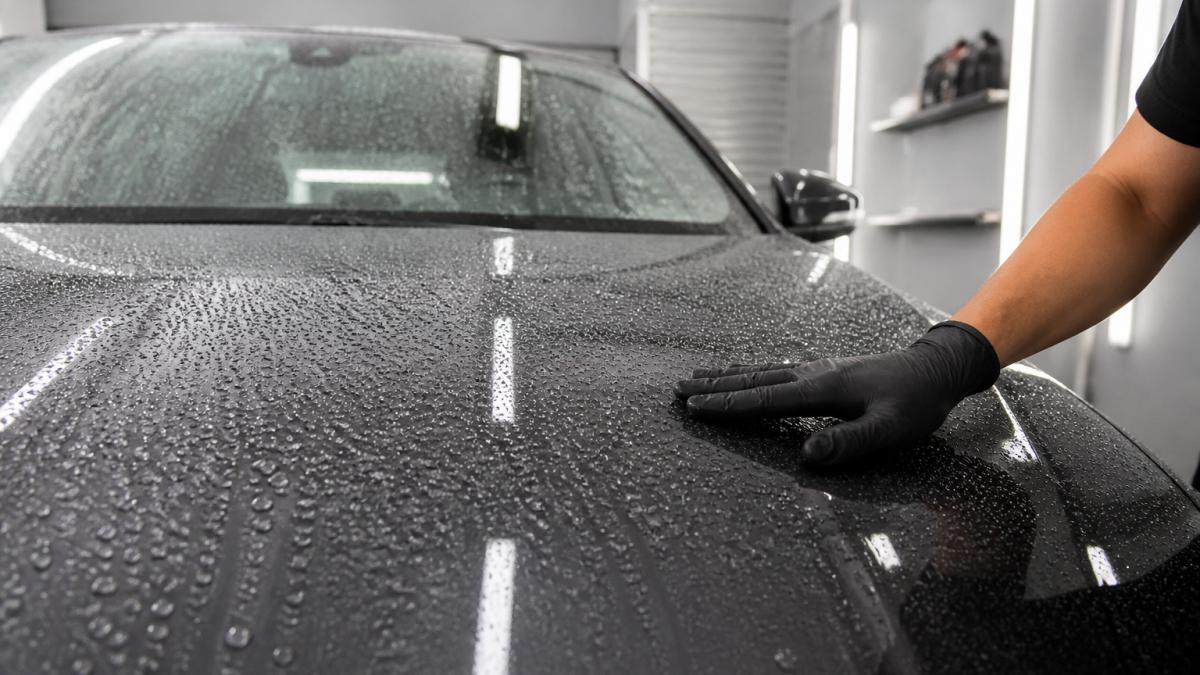
A fresh coating can dry to the touch within a few hours, but that does not mean it is finished.
In the first hours, solvents leave the film and the coating begins bonding with your paint. That bond is fragile early on; dust, rain, and washing can all interfere.
Initial Set vs. Full Cure: What Actually Happens
Initial set time is when the coating stops being wet. Full cure is when it reaches maximum hardness and chemical resistance.
The initial set happens fast. The full cure is a slow chemical reaction called polymerization. The coating cross-links into a silica-based layer over days, not minutes.
Touching a tacky surface or dry-wiping dust during this window can leave streaks that need polishing out.
Ceramic Coating Cure Time: From Touch-Dry to Fully Bonded
Ceramic coating cure time runs from a few hours to about a month, depending on the product and conditions. Most consumer wipe-on coatings reach full cure in five to seven days under normal conditions, according to Undrdog's 2026 cure time guide.
Professional-grade coatings often need a longer window. Some guides put full strength at 30 days, with roughly 90% reached around 72 hours.
A Realistic Timeline for Consumer and Professional Coatings
| Stage | Typical Timing | What You Can Do |
|---|---|---|
| Touch-dry | 2-4 hours | Drive in dry weather |
| Initial cure | 12-24 hours | Light driving, no water |
| Water-safe | 5-7 days | First wash allowed |
| Full cure | 7-30 days | Normal care, full protection |
The exact timing depends on your coating and the product's instructions.
Ceramic Coating Rain After Application: What to Do If It Gets Wet
Rain in the first 24 hours is the biggest worry owners bring to us. Water can interrupt bonding and leave spotting, but the response depends on how wet the car got, how soon, and what kind of water it was.
Here is the triage we use.
Step 1: Identify the Exposure Window
- Within the first 2-4 hours (before touch-dry): The coating is still solvent-rich and fragile. A soaking rain is a genuine problem. Do not wipe. Do not drive. Call the shop.
- 4-24 hours (touch-dry but not water-safe): A light sprinkle is usually manageable; a soaking or long drive in rain is not. The soft coating can let water leave mineral deposits that bond into the film.
- 24-72 hours: The coating is curing but not fully cross-linked. Rain is less likely to cause permanent spotting, but standing water on horizontal panels can still etch. Dry with a clean microfiber only if the surface is cool, using light pressure, never scrub.
Step 2: Match the Response to the Water Type
- Rain: Least harmful if it beads and runs off. The risk is what it carries, dust, pollen, tree sap, and what it leaves when it evaporates.
- Sprinklers: Worse than rain. Municipal water carries minerals (calcium, magnesium) that leave hard water spots when they dry on a curing coating. Rinse with deionized or filtered water if available, then blot dry, do not let it air-dry.
- Condensation: Common on cool mornings. Usually harmless on a touch-dry coating, but repeated condensation can slow the cure by keeping surface humidity high. Park in a ventilated area if possible.
Step 3: Handle Contaminants, Not Just Water
Rain rarely arrives alone. Bird droppings, tree sap, and insect strikes are the real threats during curing because they are acidic and can etch a soft film in hours.
- Bird droppings: Remove immediately with a saturated microfiber and a pH-neutral lubricant (detail spray or rinseless wash at the correct dilution). Blot and lift; do not scrub. If dried, re-wet first, never pick at it dry.
- Tree sap: Use a dedicated sap remover or isopropyl alcohol on a microfiber, then rinse. Left too long, sap on a curing coating leaves a raised residue that needs polishing.
- Insect remains: Soak with a bug remover or warm water and a microfiber, then wipe gently. No bug sponges or scrubbers during the cure window.
Step 4: Know When to Call the Shop
Call the applicator if any of these happen:
- The car was soaked within the first 4 hours.
- Water spots remain after a gentle rinse and blot-dry.
- The surface feels tacky or uneven after 24 hours.
The fix depends on severity: a light case may only need a decontamination wash and re-inspection; a bad one means polishing that panel back and reapplying. Let the shop look before you touch it.
When to Wash Car After Ceramic Coating (and What to Avoid)
Wait at least five to seven days before the first wash. This is the most common mistake we see. Owners want the shine back immediately and reach for a bucket too soon.
During the curing phase, avoid:
- Automatic brush car washes
- High-pressure water on edges and seams
- Harsh detergents and degreasers
After the cure, use a pH-neutral wash and a soft mitt. A proper maintenance schedule keeps the hydrophobic properties working for years.
Driving Conditions, Temperature, and Humidity: What Changes the Cure
Ambient temperature and relative humidity change how fast the coating sets. Most consumer coatings are rated for 65-75°F and 30-60% humidity, per Undrdog's 2026 guide. But the bigger variable owners ask about is driving, and the answer depends on where you drive, not just whether you drive.
Why Driving Is Not the Same as Touching
The coating cures by cross-linking: short polymer chains join into a dense silica-based network, driven by moisture in the air and heat. Driving exposes the film to airflow, road spray, and debris, but also to UV and sun heat, which can accelerate the initial set.
The key distinction: touching a tacky surface disrupts the film mechanically. Driving exposes it to environmental load. A dry highway run at moderate speed is low-load. A gravel road at speed is high-load.
Highway Driving vs. Garage Parking: A Practical Split
- Garage parking (best): No UV, no debris, stable temperature. The coating cures slowly and evenly, the ideal first 24 hours.
- Dry highway driving (acceptable after touch-dry): Airflow helps solvent escape, and highway debris is mostly small and non-abrasive. Avoid following trucks closely, they throw gravel and grime.
- City driving (caution): Stop-and-go means more brake dust, exhaust fallout, and chance of a door ding or puddle splash. Fine after 24 hours, risky before.
Temperature and Humidity: The Mechanism
- Cold (below 15.5°C/60°F): Slows cross-linking. The coating stays soft longer, extending both the safe-driving and no-water windows. A 24-hour touch-dry may take 36-48 hours in cold weather.
- High humidity (above 60%): Speeds the initial set because moisture drives the reaction, but can trap solvent under a skinned surface, causing cloudiness or hazing. Ventilation matters as much as humidity level.
- Low humidity (below 30%): Slows the cure and can cause the coating to skin over before solvent escapes, leading to streaks, common in heated garages in winter.
A Simple Decision Rule
After the coating is touch-dry (typically 2-4 hours), you can drive if:
- The weather is dry.
- Your route is paved and free of construction dust.
- You are not following trucks or driving on gravel.
- The temperature is within the product's rated range.
If any of those is false, park it. The coating will still be there tomorrow, and it will cure better for the wait.
Troubleshooting Premature Exposure and Booking Your Coating
If the coating was exposed too soon, look for these signs: cloudiness, water spotting that will not rinse away, or a surface that feels less slick than it should.
That is why application environment matters so much. If you want the job done where dust and weather are managed, you can see the ceramic coating options available and book a slot.
Frequently Asked Questions
How long should you wait to drive after ceramic coating?
Most consumer wipe-on coatings are dry to the touch in 2 to 4 hours, but full bonding takes longer. Once a coating is touch-dry, driving is generally possible while avoiding rain, wet roads, sprinklers, and washing. Professional-grade coatings may need longer before driving. Always follow the specific product instructions, since timelines vary by formulation and shop conditions.
Can rain damage ceramic coating before it cures?
Yes, water exposure during the curing phase can cause water spotting and interfere with surface bonding. It is generally advisable to keep the vehicle away from rain, wet roads, and sprinklers until the coating is touch-dry. If rain hits before the initial set, contact the installer for guidance. After the coating reaches its cured state, rain is no longer a threat.
Does temperature or humidity affect ceramic coating cure time?
Both matter. Consumer wipe-on coatings typically cure over several days under normal conditions. Colder or more humid conditions slow solvent evaporation and cross-linking, extending the curing duration. Hot, dry conditions can speed the initial set but may increase the risk of application residue if not managed carefully.
What happens if you drive before the coating is fully cured?
Driving too soon exposes the fresh coating to environmental contaminants, moisture, and dust accumulation that can disrupt the bonding process. While a touch-dry coating can handle a short drive, premature exposure to wet roads or rain may cause water spotting and reduce long-term chemical resistance. In serious cases, the protective layer may not fully bond, shortening its lifespan. Wait for the recommended window and follow your installer's advice.
Getting the cure window right is the difference between a coating that lasts years and one that fails early. At MG Customs, we apply ceramic coating in a controlled bay and give you a clear drive-and-wash schedule before you leave. Our one-stop shop also handles nano ceramic window tinting and full audio packages, so your protection and upgrades happen in one place. Get a free quote from MG Customs and protect your paint the right way from day one.