 how-to
7 Car Starter Installation Steps Winnipeg Drivers Should Know
Last Updated: October 30, 2026
Quick Summary
A car starter installation near you means wiring an aftermarket remote start module into your ignition, immobilizer, and safety systems so the engine runs on command. The work covers a compatibility check, harness prep, module programming, wiring and bypass, and testing. Skipping any stage can leave a starter that works in summer but fails in winter.
- Manual transmissions need reservation mode so the car cannot start in gear.
- Push-to-start vehicles need a bypass module that mimics the fob signal.
- A suspiciously cheap quote can point to a universal harness and hand-spliced wiring.
- Ask whether the shop uses soldered and sealed connections or crimp connectors.
- Have your VIN ready so the shop can confirm trim, engine, and security options.
Table of Contents
- Before You Book: What a Car Starter Installation Near Me Actually Involves
- Remote Starter Compatibility by Vehicle: Trucks, Push-to-Start, and Manual Transmissions
- Remote Starter Installation Cost: Labor, Parts, and What Moves the Price
- Remote Starter Installation Time: What to Expect on Appointment Day
- Remote Starter and Vehicle Warranty: What You Need to Confirm Before Wiring
- Choosing a Qualified Installer and Booking Your Installation Appointment
- Frequently Asked Questions
Before You Book: What a Car Starter Installation Near Me Actually Involves
A car starter installation near me means wiring an aftermarket remote start module into your ignition, immobilizer, and safety systems so the engine runs on command. It's more involved than most drivers expect.
Vehicles typically have several ignition wires, not one, plus a transponder handshake that blocks the engine without the right key signal. A proper installation has to account for all of it.
The work breaks into five stages:
- Compatibility check - confirm your make, model, year, and transmission support a remote start
- Harness prep - match a vehicle-specific wiring harness to your ignition system
- Module programming - flash the remote start unit to your vehicle's firmware
- Wiring and bypass - connect the module and install an immobilizer bypass
- Testing - verify range, shutdown triggers, and safety interlocks
Skipping any stage can leave a starter that works in summer but fails in winter. Below, we cover each step and what it generally involves.
Remote Starter Compatibility by Vehicle: Trucks, Push-to-Start, and Manual Transmissions
Remote starter compatibility depends on transmission type, ignition system, and whether your vehicle has a factory immobilizer. Most automatics can take a remote start; manuals need extra safety hardware, and push-to-start models need a different bypass module.
Trucks are usually straightforward to fit. Diesels sometimes need a longer crank time programmed into the module; gas trucks are simpler.
Push-to-start vehicles aren't harder to start remotely, but they're harder to wire. The factory button communicates digitally, so the installer needs a bypass module that mimics the fob signal. The wrong module means the starter won't engage at all.
Manual transmissions need extra care. A manual can be fitted with a remote start, but it requires reservation mode: you park, set the brake, and the engine stays running until you arm the system. If that sequence breaks, the car can start in gear.
Before you book, have these details ready:
| Detail | Why It Matters |
|---|---|
| Vehicle year, make, model | Determines harness and module |
| Transmission type | Manuals need reservation mode |
| Ignition type | Key turn vs. push-to-start |
| Factory alarm present | Changes bypass wiring |
| Existing aftermarket electronics | Affects available wiring space |
Remote Starter Installation Cost: Labor, Parts, and What Moves the Price
Remote starter installation cost comes down to four stacked components: the starter unit, the vehicle-specific harness, the bypass module, and labor hours. Installation quotes generally vary with the system and vehicle involved.
Here's how each component moves the total:
| Component | What drives the cost | Typical effect on the quote |
|---|---|---|
| Starter unit | One-way vs. two-way, range, smartphone control | Largest single line item; two-way and connected systems cost more than one-way |
| Harness | Vehicle-specific T-harness vs. hand wiring | A dedicated harness costs more as a part but cuts labor and callback risk |
| Bypass module | Immobilizer type, push-to-start, factory alarm | Required on most modern vehicles; adds a part and programming step |
| Labor | Dash access, wiring route, testing time | Simple key-turn jobs sit at the low end; push-to-start trucks and alarm integration run longer |
What actually moves your quote up or down:
- Range and remote type, one-way remotes cost less than two-way LCD remotes; smartphone control adds a module and a data plan consideration.
- Bypass module, push-to-start and immobilizer vehicles need one; some need a module tied to the vehicle's firmware.
- Harness complexity, some vehicles accept a plug-and-play T-harness, others need hand wiring into ignition and accessory circuits.
- Labor time, straightforward installs take less time than full teardowns; older vehicles with brittle plastics or prior aftermarket wiring take longer.
- Add-ons, keyless entry integration, trunk release, alarm pairing, or bundling audio and tinting into the same appointment.
Because pricing depends on your vehicle and system, send your year, make, model, and transmission type, and check our website for current pricing or request a quote with those details.
Repairing a damaged module or ignition circuit after a poor installation can cost far more than the difference between two quotes, so factor that into your comparison.
Remote Starter Installation Time: What to Expect on Appointment Day
Installation time varies with the vehicle and system. Simpler key-turn installs generally take less time than push-to-start trucks with two-way remotes and alarm integration.
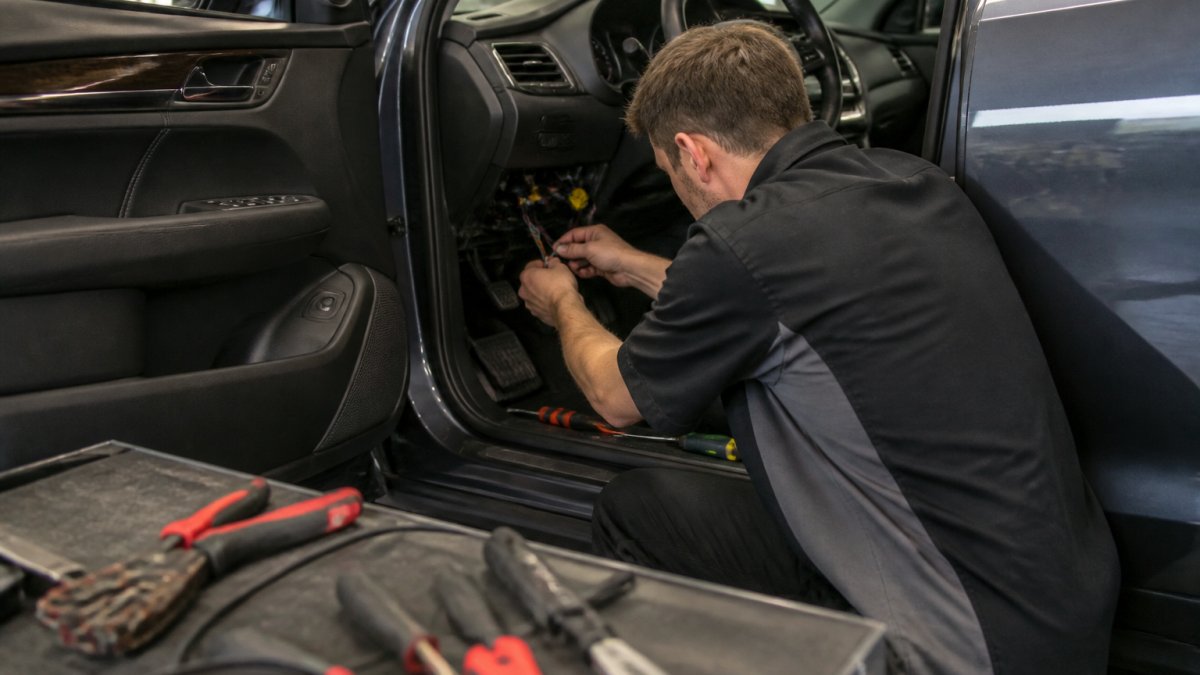
A typical installation appointment generally includes these steps:
- Drop-off and walkaround - confirm the system and note existing electronics
- Dash access - panels come off to reach the ignition harness
- Module mounting - the unit goes behind the dash, secured and away from heat
- Wiring and bypass - harness connects, bypass module installs
- Programming - the module learns your vehicle's firmware
- Testing - range, shutdown, and brake interlock checks
- Reassembly and handover - panels go back, we walk you through the remote
Remote Starter and Vehicle Warranty: What You Need to Confirm Before Wiring
A remote starter and vehicle warranty can coexist, but confirm two things before anyone touches your wiring: whether your manufacturer's warranty excludes aftermarket electrical modifications, and whether the installer guarantees their work in writing.
Aftermarket parts do not automatically void a vehicle warranty in general; coverage is typically affected by a modification that causes a failure. Check your manufacturer's warranty terms for specifics. If a poorly spliced wire fries your body control module, the dealer can decline that repair. If your transmission fails and the starter had nothing to do with it, the warranty still stands.
Installation quality matters as much as the product itself. A clean install generally uses a vehicle-specific harness and sealed connections.
When choosing an installer, consider asking for:
- A written installation warranty covering labor and connections
- Confirmation of the harness type used
- A record of the module and bypass part numbers for your file
Keep that paperwork. If a dealer ever questions a repair, it's your proof the install was done properly.
Choosing a Qualified Installer and Booking Your Installation Appointment
Choosing a qualified installer comes down to three checks: vehicle-specific experience, a written warranty, and a shop that will show you the wiring before it disappears behind the dash. Everything else is marketing.
The installer matters as much as the product. Two shops can sell the same remote start unit and deliver different results, depending on harness selection, soldering versus splicing, and whether they test the safety interlocks before handover.
Use this checklist when you call around, and listen for what a strong answer sounds like:
- Do they ask for your VIN before quoting? A VIN confirms trim, engine, and factory security options. A shop that quotes without it is guessing.
- Can they name the harness and bypass module for your vehicle? A strong answer names a specific part number or platform; a weak one is "we'll figure it out when it's here."
- Do they offer a written installation warranty? Ask what it covers, labor, connections, and the module, and for how long. Get it in writing before drop-off.
- Will they show you the completed wiring? A confident shop will walk you through harness routing and connections at handover.
- Do they test brake interlock and hood pin safety? These stop the engine from starting in gear or with the hood open. Ask how they test them.
- Are they set up to handle manual transmissions, or do they decline? Declining is honest; saying yes without mentioning reservation mode is a red flag.
- Do they use soldered and sealed connections, or crimp connectors? The answer tells you more about long-term reliability than any brand name.
MG Customs is a one-stop automotive customization shop offering audio, window tinting, and electronics installation. Many vehicle owners bundle several services at one shop.
Booking your appointment is simple: contact MG Customs through our website to request a quote and schedule a slot. Share your vehicle year, make, model, and transmission type so the shop can confirm details before your visit.
Frequently Asked Questions
Can a remote starter be installed in any car?
Not every vehicle takes one the same way. Remote starter compatibility by vehicle depends on the make, model, year, transmission type, and whether the car uses push-to-start or a traditional key. Manual-transmission vehicles need a starter with a reservation or neutral-safety mode, and some newer vehicles require a specific interface module to talk to the factory immobilizer. Confirm your vehicle details before booking.
Will installing a remote starter affect my vehicle warranty?
A remote starter alone does not automatically void your warranty, but a poor installation can create problems the manufacturer may not cover. Ask the installer how they connect to the factory wiring and whether they use a vehicle-specific harness. Keep your installation receipt and any product warranty paperwork. If a dealer ever questions a repair, that documentation shows what was installed and by whom.
How much does it cost to have a starter installed?
Remote starter installation cost depends on the starter type, the vehicle, and the labor involved. Costs generally vary with the vehicle and the system chosen. Ask for a quote based on your exact vehicle before you commit.
What should I check before booking a remote starter installation?
Confirm your vehicle's make, model, year, and transmission type, and whether it is push-to-start. Ask whether the shop uses vehicle-specific wiring and what installation warranty they provide. Then contact the shop to book an appointment.